Dear Weary Therapist……
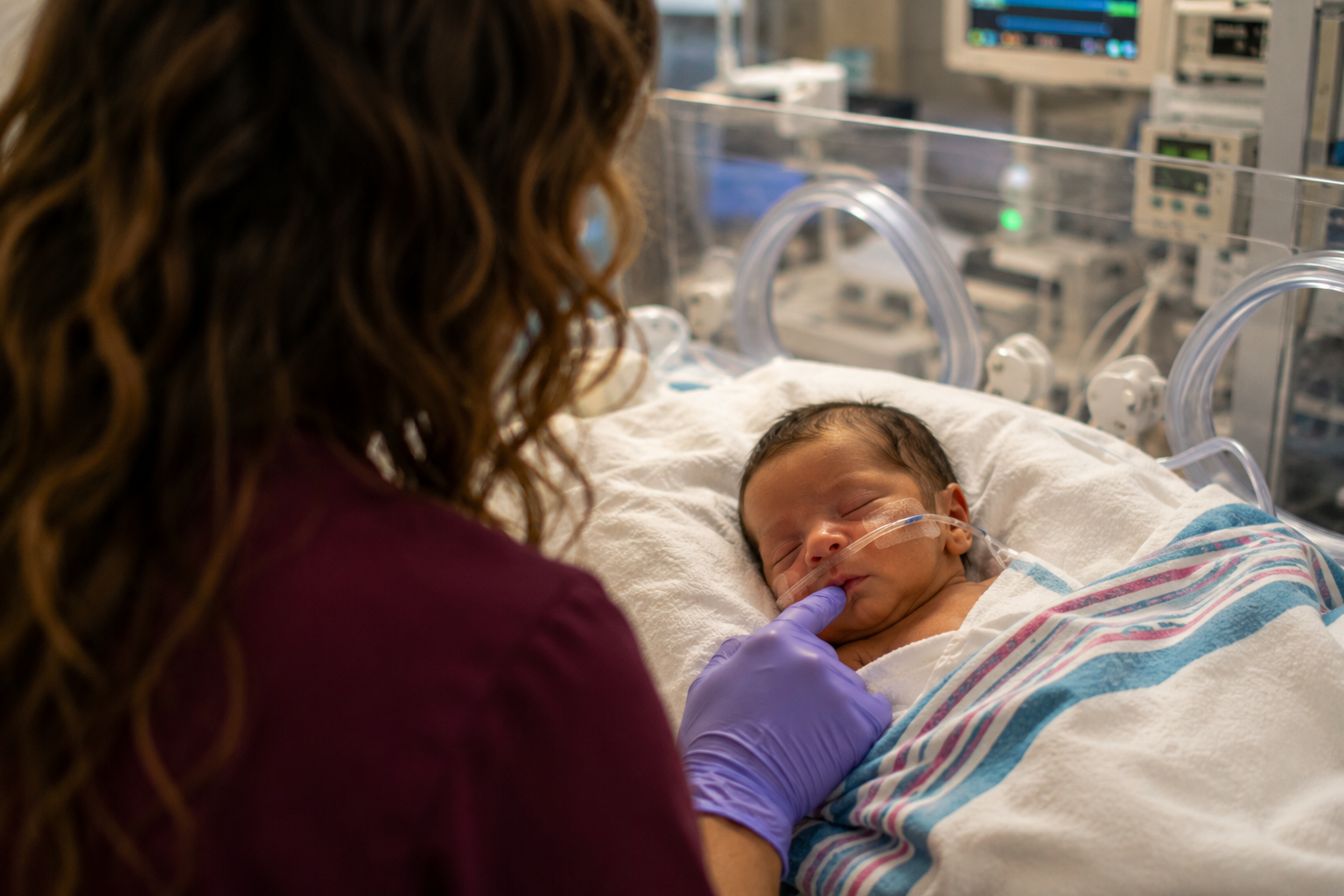
There are a lot of things about NICU practice that we cannot control.
Nurses are overburdened. Therapists are understaffed. Priorities compete constantly. There are days when we barely have enough time to do the work we have to do, never mind all of the developmental care we know could make a difference.
We can advocate. We can educate. We can try to change practice and build collaboration. And we should.
But sometimes, changing NICU culture just isn't realistic.
Sometimes the collaboration isn't there. Sometimes the resources aren't there. Sometimes you have explained the rationale ten different ways, and nothing changes.
So what do we do then?
Because as neonatal therapists, we are still tasked with supporting development—even when we aren't necessarily given the resources, time, or systems to do it the way we wish we could.
For me, the answer has increasingly become to focus on the baby in front of me and the interaction I can provide.
I spend a few minutes providing positive peri-oral touch, knowing that it may help that baby better tolerate the next round of tape removal, suctioning, or hands around their face.
I place a scent cloth near a baby's head, knowing I may be the only person who remembers to do it that week, but hoping that those moments of exposure help that baby begin to familiarize with the smell of their mother's milk.
I offer a positive oral experience in the middle of a day filled with necessary but unpleasant ones.
I protect a moment of enjoyment.
I help a baby experience their mouth as something other than a place where things are done to them.
Are those few minutes enough to completely alter that baby's developmental trajectory?
I don't know.
And I think that's one of the hardest parts of this work.
We want consistency. We want repetition. We want the developmental practices we recommend to become part of routine care—not something that happens only when the therapist is at the bedside.
But sometimes that isn't the reality, and it can make these small interactions feel almost fruitless.
What difference does my five minutes make if no one does it again tomorrow?
I've asked myself that question plenty of times. But I've started to think of it in a different way.
If I might be the only person providing this experience today, isn't that actually a reason to keep doing it? Because the alternative is that the baby doesn't get that experience at all.
Maybe I can't control what happens during the other 23 hours and 55 minutes of that baby's day.
But I can control what happens during my five. And maybe that's worth something.
We spend a lot of time talking about changing NICU culture—and culture change matters. But culture change is slow, complicated, and often dependent on things far outside the control of the individual clinician standing at the bedside.
Supporting development doesn't always have to begin with changing the entire system. Sometimes it begins with one interaction.
We have been tasked with supporting these babies' development.
So when changing the culture feels impossible, when collaboration feels out of reach, and when there simply aren't enough hours in the day to do everything we know could make a difference, I try to come back to what is actually within my control.
Me and the baby in front of me.
The next interaction. The next opportunity to make an experience a little more positive, a little more predictable, or a little more developmentally supportive.
It may feel small. It may even feel insignificant.
But if I am the only person doing it, then perhaps that's not a reason to stop.
Perhaps that's the reason I need to keep doing it.
-Rachel
