When Good Ideas Come Together
The Shared Ideas and Expanded Possibilities of Milk Drops and the Prefeeding Pathways
By Rachel Selman MS. OTR/L, CNT & Barbara O’Rourke RN-NIC
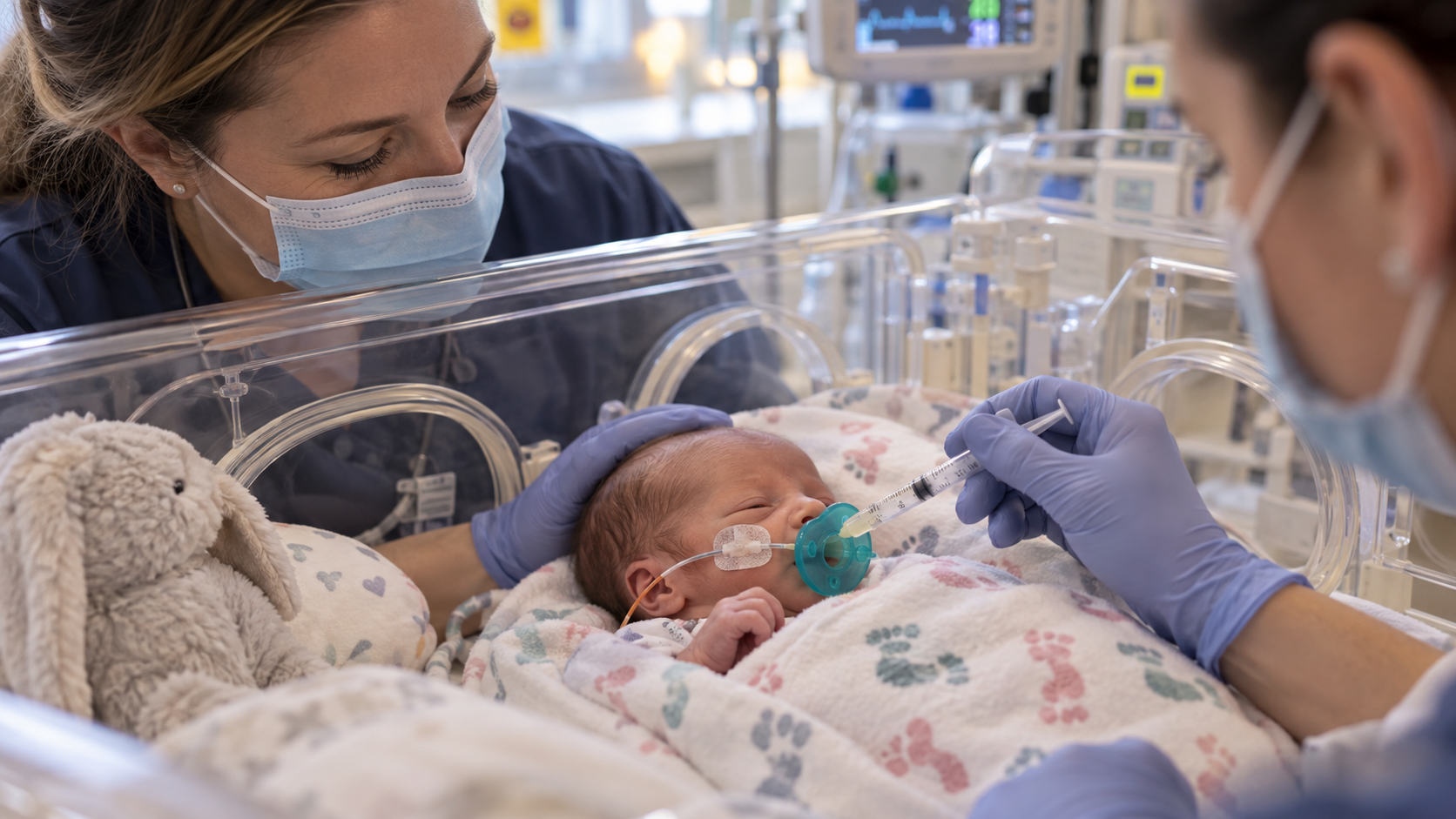
We get this question a lot: “Is Prefeeding Pathways basically the same thing as Milk Drops?”
It’s easy to see why people ask. The two share a lot of common ground, but there is more to the story.
That is why Barbara O’Rourke, developer of Milk Drops, and I decided to write this post together. We have a deep mutual respect for each other’s work and, more importantly, for what each approach brings to our field. So while we will talk about what makes these practices different, we think it’s just as important to understand what unites them.
New practices in our field do not need to be in competition with one another. They can build on each other, strengthen each other, and still have different purposes. We hope that by writing this together, we can better explain not only where Milk Drops, Simulated-feeds, and Prefeeding Pathways overlap, but also why their differences matter.
There are really two things we hope to make clear.
First, Prefeeding Pathways framework is not just Simulated-Feeding therapies. The framework was created to guide the use of many different prefeeding interventions and to establish a true continuum of care starting with our youngest infants.
Second, while Milk Drops and Simulated-Feeding may sometimes look very similar, their intentions can be different. And intention in treatment planning matters.
The Intention Behind Milk Drops
At its core, Milk Drops provides early positive, consistent milk-tasting experiences. If we look deeper, we see it is so much more. When the infant is offered milk drops he becomes a participant. The caregiver only continues to offer more milk drops if the infant responds in a positive manner…by licking or sucking. As the infant learns to enjoy and trust, he begins to wake up before cares…making neural connections between hunger, taste, smell, and sucking to the enjoyment of eating and feeling full.
One of the most important aspects of the Milk Drops protocol is that it allows the work of the neonatal therapists to continue through the hands of nurses and parents with every set of cares. This consistency is the key to both wiring neural connections and allowing the infant to practice oral motor skills. The positive milk experiences become a shared responsibility across disciplines and with families, rather than something that only happens when a feeding therapist is at the bedside.
The primary intention of Milk Drops is pleasure and experience. We are not asking the infant to adapt to a challenge or demonstrate a particular feeding skill. We are giving the infant an opportunity to experience milk, sucking, smell, taste, and connection in a positive way. With simulated feeding, the intention shifts.
When Experience Becomes an Adaptive Learning Opportunity
There is a reason Milk Drops and Simulated-feeding can look so similar in practice. Both may involve milk, sucking, a pacifier, a gloved finger, or syringe drops. The distinction is not necessarily in what we see, but in what we are asking the infant to do with the experience.
The difference is in the intention behind the experience.
Simulated-feeding experiences should always remain pleasurable, but now we are introducing a carefully graded learning demand. We may change the size, frequency, placement, or method of milk delivery to ask the infant to become a little more coordinated, integrated, engaged, or adaptive.
We aren't simply giving the infant an experience. We are using the experience therapeutically to help build toward oral feeding competence. Though we believe all premature infants benefit from this gentle grading of demands and learning, it is especially important for infants who are starting at a significant disadvantage. Extreme prematurity, grave illness, or neurodevelopmental differences that make learning a little more challenging. Those infants will highly benefit from the controlled milk tasting learning process that Simulated-feeding allows for.
That distinction is also why, at this time, we see simulated feeding as primarily a therapist-led intervention. Feeding therapists are specifically trained in activity analysis and grading. They spend their days modifying task for functional gain. During Simulated-feeds feeding therapists watch infant behaviors, monitor adaptations and determine whether to increase the demand, decrease it, or stop altogether.
Milk Drops asks the infant to experience.
Simulated feeding asks the infant to experience, learn, and adapt.
Both should be pleasurable. Both use milk experiences intentionally. Both can help prepare an infant for feeding, and both are part of a robust prefeeding program. Milk drops should be performed consistently at bedside with nurses, while therapist build opportunities for more complex controlled bolus learning experiences.
The Purpose of the Prefeeding Pathways
The Prefeeding Pathways Framework was created to recognize the value of many different prefeeding interventions and, importantly, to give clearer goals for why and when we use them.
That is exactly why Milk Drops fits so naturally within the Foundation Pathway and early Guided Progress work.
The Foundation Pathway and Milk Drops share the same fundamental goal: positive, pleasurable oral experiences without asking the infant to perform. It is about experience, exposure, connection, and building a positive foundation for feeding.
Simulated-feeding experiences are progressive, but they also rely on consistency. Once an infant is able to integrate non-nutritive sucking on a pacifier with milk tasting, a Milk Drops protocol using the pacifier as the interface can continue as a GP Level 1 simulated-feeding experience. At this level, it provides a low-demand opportunity for the infant to coordinate sucking, tasting, and swallowing while optimizing repeated learning experiences through familiar, positive sensory-motor practice.
As you begin to intentionally challenge the infant’s coordination by advancing bolus size, frequency, or placement, the practice moves more clearly into the simulated-feeding experiences that are hallmark to the Prefeeding Pathways™ framework. In this way, Milk Drops and Simulated-Feeding are not in competition with one another — they are extensions of the same developmental continuum.
There Is Room for All
As the fields of prefeeding, feeding, and neonatal care continue to grow, we hope we remember that new ideas do not have to replace one another to move our practice forward. We can share principles and still have different intentions. We can build on the work that came before us while continuing to ask new questions.
Prefeeding Pathways was never intended to identify one “right” prefeeding intervention. It was created to help us understand what we are trying to accomplish and create a continuum of interventions that matches developmentally appropriate goals.
Celebrating the strengths of one practice does not diminish the value of another. It gives us more ways to meet the infant where they are—and more tools to help them move forward.
-Rachel and Barb
